Newsletter Subscribe
Enter your email address below and subscribe to our newsletter

 ByJohn A
Cryptocurrency arbitrage exploits price differences for the same asset across markets. Traders watch quotes, capitalize on cross-exchange gaps, and execute rapid buys and sells to lock in profits. The approach depends on market fragmentation, liquidity, and timing, with fees and slippage eroding returns. Risk management and disciplined execution are essential. The dynamics are nuanced, and practical setups raise questions that this discussion aims to illuminate.
Cryptocurrency arbitrage refers to the practice of capitalizing on price discrepancies of the same asset across different markets or trading venues. It identifies opportunities created by market fragmentation and efficiency gaps.
This phenomenon persists due to exchange fees, liquidity gaps, and cross exchange timing issues, which hinder uniform pricing and invite profit-seeking, freedom-oriented traders to exploit transient mispricings.
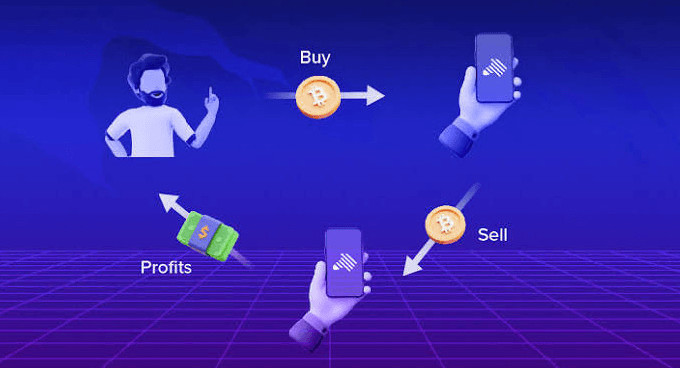
Inter-exchange arbitrage operationalizes the price differences observed across trading venues by executing simultaneous or rapid sequential trades on multiple platforms. Practically, traders monitor quotes, exploit cross-exchange price gaps, and coordinate order placement to capture small profits. Market liquidity affects fill quality, while latency concerns influence timing; even minor delays can erase margins and introduce risk, necessitating disciplined execution and monitoring.
Triangular and cross-venue arbitrage involves exploiting pricing inefficiencies within a single exchange or across related venues by executing a sequence of trades that converts one asset into another and back to the original, or by coordinating prices across multiple venues.
The arbitrage window hinges on cross venue timing, liquidity risk, and fee structure, demanding disciplined execution.
See also: AI in Product Quality Assurance
How large are the potential costs and risks when pursuing arbitrage, and what does a practical starter plan look like for a beginner?
The topic outlines tangible costs, including trading fees, withdrawal limits, and slippage, plus exposure to volatility impact.
Beginners should implement basic hedge strategies, maintain strict risk controls, and start with simulated or small-scale trades before scaling.
Arbitrage arises from price fragmentation across markets, offering a route to risk-adjusted gains when executed efficiently. Inter-exchange, triangular, and cross-venue strategies exploit temporary mispricings, liquidity gaps, and latency advantages. Yet profits are delicate, eroded by fees, slippage, and withdrawal limits, demanding disciplined risk controls and precise timing. Beginners should simulate extensively before real trades. Is the lure of quick profits worth the operational complexity and recurring costs, or do these frictions often outweigh the potential returns?